
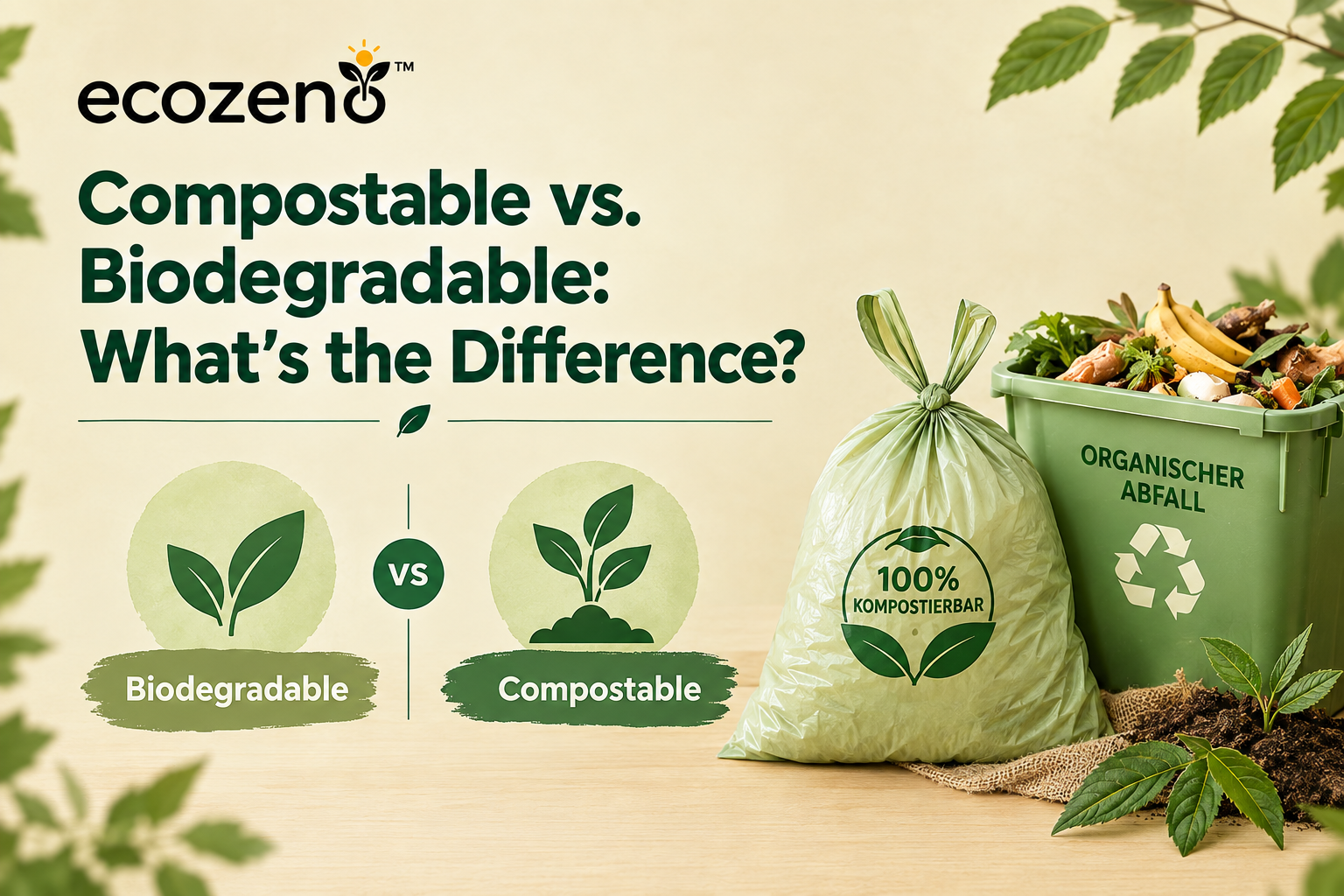
When you are trying to make sustainable choices, walking down the household aisle can feel like decoding a secret language. Two terms you see everywhere—especially on waste bags, packaging, and everyday items—are biodegradable and compostable.
While they sound like the same thing, using them interchangeably is one of the most common eco-misconceptions. Understanding the difference is key to making sure your green habits actually help the planet. Here is exactly what these terms mean and how to handle them in your daily routine.
The Big Picture: All Compostable Items are Biodegradable, But Not Vice Versa
To understand how they differ, it helps to look at the timeline and the end result of how these materials break down.
1 What Does "Biodegradable" Actually Mean?
At its core, biodegradable simply means a material can be broken down by living organisms (like bacteria, fungi, and microbes) over time.
The Catch : The term "biodegradable" has no legal time limit. A piece of wood is biodegradable, but so is a traditional plastic bag if you wait hundreds of years.
The Environment : Because there are no strict regulations on the term, a product labeled "biodegradable" might still leave behind toxic chemical residues or microplastics as it disintegrates.
2 What Does "Compostable" Mean?
Compostable is a much stricter, highly regulated term. For a product to be labeled compostable, it must break down into nutrient-rich, organic matter under specific environmental conditions, leaving zero toxic residue behind.
The Timeline : Unlike general biodegradable items, compostable materials must break down quickly—usually within a few months.
The Gold Standard : True compostable products undergo rigorous testing to ensure they actively enrich the soil rather than polluting it.
The European Standard: Look for the Certification
In Germany and the wider EU, you don't have to guess whether a product is truly eco-friendly. Look for official certifications like the EN 13432 standard. This certification guarantees that the packaging or product will entirely degrade in an industrial composting facility within 10 to 12 weeks, completely free of heavy metals or harmful microplastics.
Quick Comparison Table
| Feature | Biodegradable | Compostable |
|---|---|---|
| Timeframe | Unlimited (can take days or centuries) | Fast (usually weeks to a few months) |
| End Result | Breaks into smaller pieces | Turns into nutrient-rich soil (humus) |
| Residue | May leave microplastics or toxins | 100% non-toxic and eco-safe |
| Regulation | Loosely regulated term | Strictly regulated (e.g., EN 13432) |
How to Dispose of Them Correctly
Buying eco-friendly items is only half the battle; disposing of them correctly ensures they don't end up locked in a landfill where they can't degrade.
For Compostable Items
Look closely at the label. If it says "Home Compostable," you can safely throw it into your backyard garden compost. If it specifies "Industrially Compostable," it requires the high heat of local waste management facilities. In Germany, check your local municipality rules before tossing certified compostable bags into the Biotonne (brown bin), as sorting rules can vary by region.
For Biodegradable Items
Avoid putting non-certified "biodegradable" plastics into your organic waste bin. If they take too long to break down, they ruin the batch for local composting plants and usually end up incinerated or in landfills anyway.
Making Eco-Living Easy
Choosing certified compostable alternatives—like high-quality, EU-compliant organic waste bags—is a simple switch that makes a massive difference. By knowing your labels, you can confidently reduce your plastic footprint and make green living truly effortless.