
Beyond Plastic: How Compostable Bags Are Reshaping Everyday Sustainability
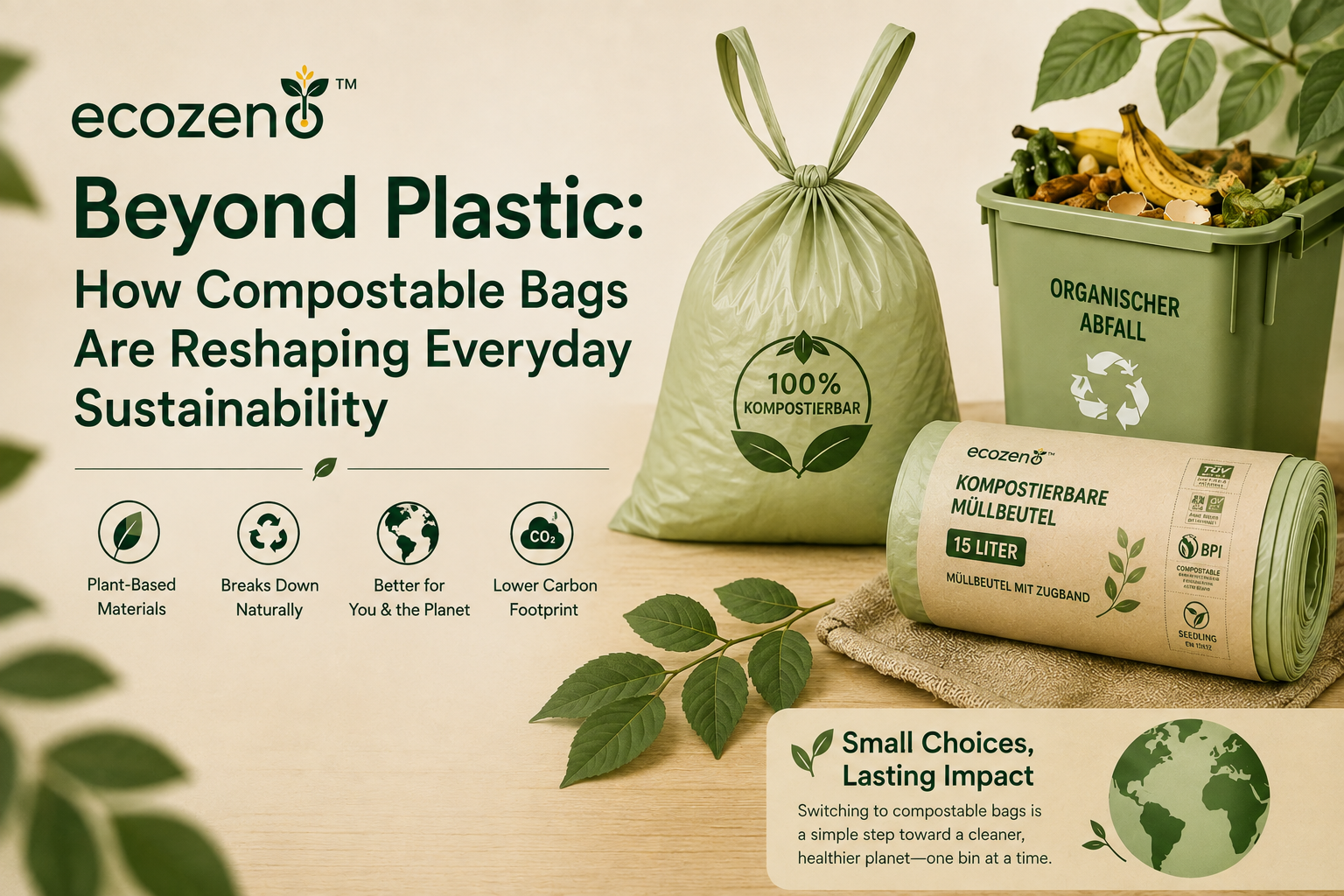
In the journey toward a zero-waste lifestyle, single-use conventional plastics are often the first major obstacle households face. From kitchen food scraps to trash lining, traditional petroleum-based plastic bags persist in landfills and ecosystems for hundreds of years.
Enter compostable bags — a plant-based solution rapidly changing how households and businesses manage organic waste and daily disposal.
The Hidden Cost of "Convenient" Plastic
Every year, hundreds of billions of plastic bags are produced globally. Most end up in landfills, incinerators, or aquatic ecosystems. Over decades, these plastics don't disappear; they break down into dangerous microplastics that contaminate soil, water supplies, and food chains.
Even standard "degradable" plastics often just break apart into smaller plastic fragments faster. Compostable materials, on the other hand, return organic matter back to the earth.
How Compostable Bags Differ from Traditional Options
| Feature | Conventional Plastic | Oxo-Degradable Plastic | Certified Compostable |
|---|---|---|---|
| Primary Material | Petroleum | Petroleum + Additives | Plant Starches (Corn, Potato, PLA) |
| Breakdown Process | Centuries to fragment | Breaks into microplastics | Converts to biomass, CO₂, and water |
| Toxic Residue | High | High | Non-toxic / Organic |
| Standards Met | None | None | EN 13432 / OK Compost certified |
4 Environmental Benefits of Making the Switch
Eliminating Microplastic Contamination
Compostable bags are derived from natural starches and bio-polymers. When exposed to heat, moisture, and beneficial microorganisms in a composting environment, they break down into natural humus, leaving no toxic synthetic residues behind.
Encouraging Organic Waste Separation
Collecting kitchen scraps in leaky, standard bins can be messy. Breathable, leak-resistant compostable bin liners make organic waste disposal clean and easy. When food waste is diverted from landfills into compost facilities, methane emissions drop significantly.
Supporting the Circular Bio-Economy
Unlike fossil-fuel-derived plastics, bio-based bags rely on renewable plant crops. This closes the loop: plants grow, turn into bioplastics, decompose naturally, and enrich the soil to grow future crops.
Reduced Carbon Footprint
Manufacturing plant-based polymers generally emits fewer greenhouse gases than refining crude oil into polyethene, helping lower the carbon intensity of everyday packaging.
Easy Ways to Integrate Compostable Bags Into Daily Routines
Kitchen Counter Scrap Bins: Line small caddies with compostable liners for vegetable peels, coffee grounds, and food scraps.
Pet Waste Disposal: Use certified home-compostable bags for garden cleanup where appropriate.
Shopping & Produce: Opt for reusable mesh bags or plant-based bioplastic bags for fruit and vegetable purchases.
Pro Tip
Always check for certification logos like EN 13432 or OK Compost Industrial / Home. These ensure the bag meets strict eco-efficiency standards without hidden plastic fillers.
Small Choices, Lasting Impact
Transitioning to compostable alternatives doesn't require overhauling your whole routine overnight. Swapping conventional plastic liners for certified compostable options is a simple, high-impact step toward a cleaner planet — one bin at a time.