
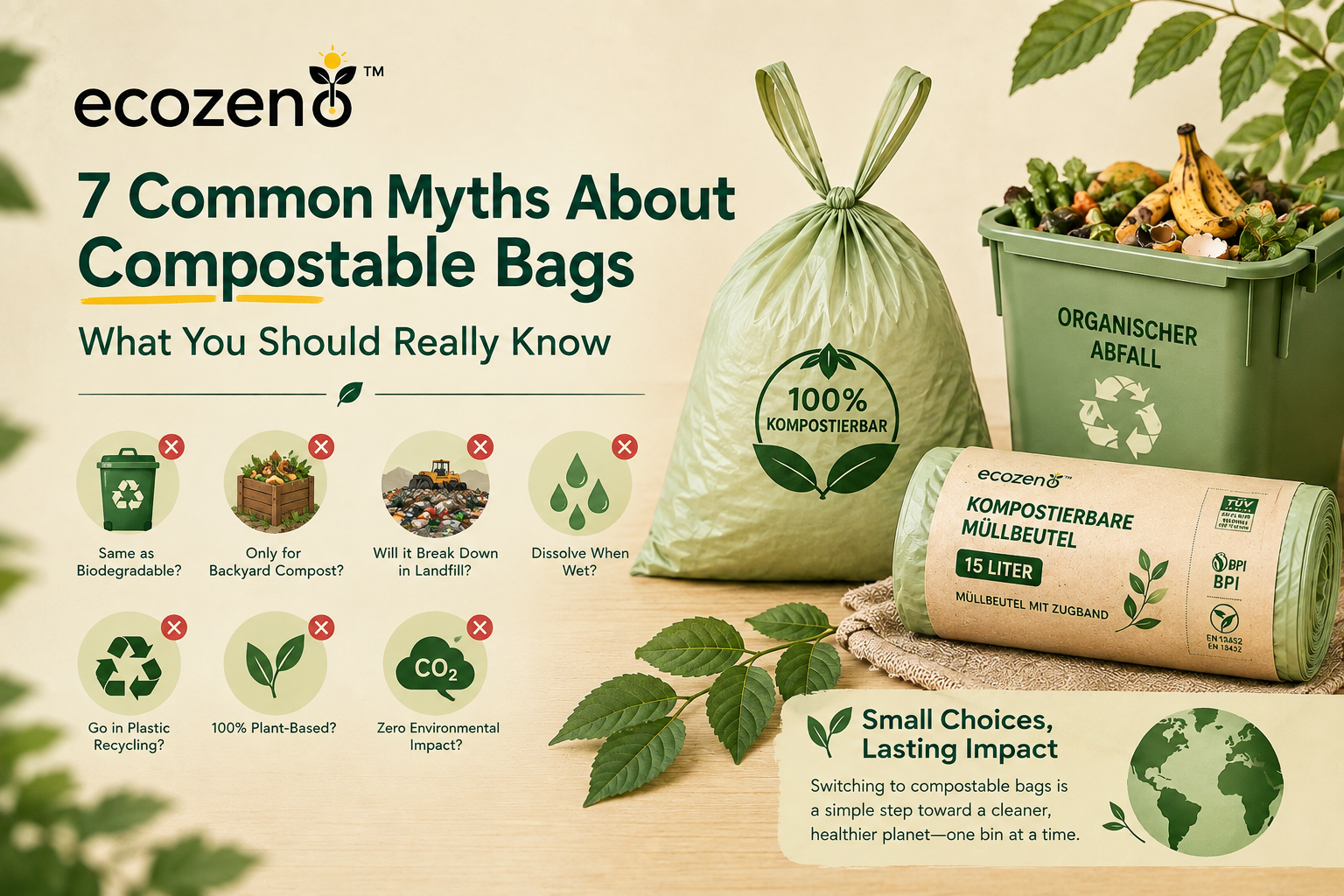
Compostable bags have become a popular choice for eco-conscious households — but with popularity comes confusion. Misinformation spreads quickly, and many well-meaning consumers end up making choices that undermine the very environmental benefits they are trying to achieve.
Here, we tackle the seven most common myths head-on, so you can feel confident every time you reach for a compostable bag.
The Myths — and the Reality
Myth: ""Compostable" and "Biodegradable" mean the exact same thing."
The Reality:
They are completely different standards. "Biodegradable" is a vague term meaning something will break down eventually — even if it takes decades or leaves toxic residue. "Compostable" means the material will break down into nutrient-rich soil within a specific timeframe without leaving toxic chemicals behind.
Myth: "You can throw compostable bags into any standard backyard compost pile."
The Reality:
Most compostable bags require the high heat (140°F / 60°C or more) of an industrial composting facility to break down. Backyard piles rarely get hot enough, meaning the bag could sit intact for years — unless it is specifically certified as "Home Compostable."
Myth: "If they end up in a landfill, they will still break down safely."
The Reality:
Landfills are tightly packed, oxygen-starved environments. Without oxygen, compostable bags cannot decompose properly. Instead, they undergo anaerobic digestion and release methane — a greenhouse gas far more potent than carbon dioxide. They must be sorted into organic waste streams to do their job.
Myth: "Compostable bags degrade instantly if they get wet or rained on."
The Reality:
Modern bio-plastics (like those made from cornstarch or PLA) are engineered to be durable and leak-proof during normal everyday use. They only begin to rapidly decompose when exposed to the specific combination of high heat, moisture, and active microorganisms found in a compost environment.
Myth: "They contaminate the traditional plastic recycling stream anyway."
The Reality:
While they should not be put in the recycling bin, modern optical sorting technology at recycling plants is increasingly efficient at separating bio-plastics from traditional petroleum plastics (like PET or HDPE). However, educating consumers to keep them out of recycling bins remains critical.
Myth: "Compostable bags are always 100% plant-based."
The Reality:
Many certified compostable bags contain co-polymers derived from fossil fuels (like PBAT) blended with plant starches to give them strength and flexibility. The key isn't necessarily where the material comes from, but the fact that it safely biodegrades into compost without leaving microplastics.
Myth: "Because they are eco-friendly, they have zero environmental impact."
The Reality:
No manufactured product has a zero-impact footprint. Growing the crops (like corn or sugarcane) to make bio-plastics requires land, water, and energy. While they are a massive upgrade from permanent petroleum plastic, the ultimate goal should always be reducing overall consumption alongside using compostable alternatives.
Quick-Reference Summary
| The Myth | The Quick Reality | Takeaway for the Reader |
|---|---|---|
| They are just "biodegradable." | "Compostable" has much stricter, toxin-free standards. | Look specifically for certified compostable labels. |
| They rot in the backyard. | Most require commercial heat to break down. | Check for "Home Compostable" vs "Industrial" certification. |
| Landfills are fine. | They trap methane in landfills due to lack of oxygen. | Always dispose of them in dedicated organic / green bins. |
| They dissolve in rain. | They are durable and only break down under compost conditions. | Don't worry about minor leaks or damp trash. |
Pro Tip
When shopping, look for the EN 13432, OK Compost Industrial, or OK Compost Home certification marks. These are your guarantee that the bag meets independently verified composting standards — not just a marketing claim.
Knowledge Is the First Step
Understanding what compostable bags can and cannot do empowers you to use them correctly — and to advocate for better organic waste infrastructure in your community. The more households that sort correctly, the greater the collective impact on reducing landfill methane and microplastic pollution.